LevelUp.
Work that plays
like a game.
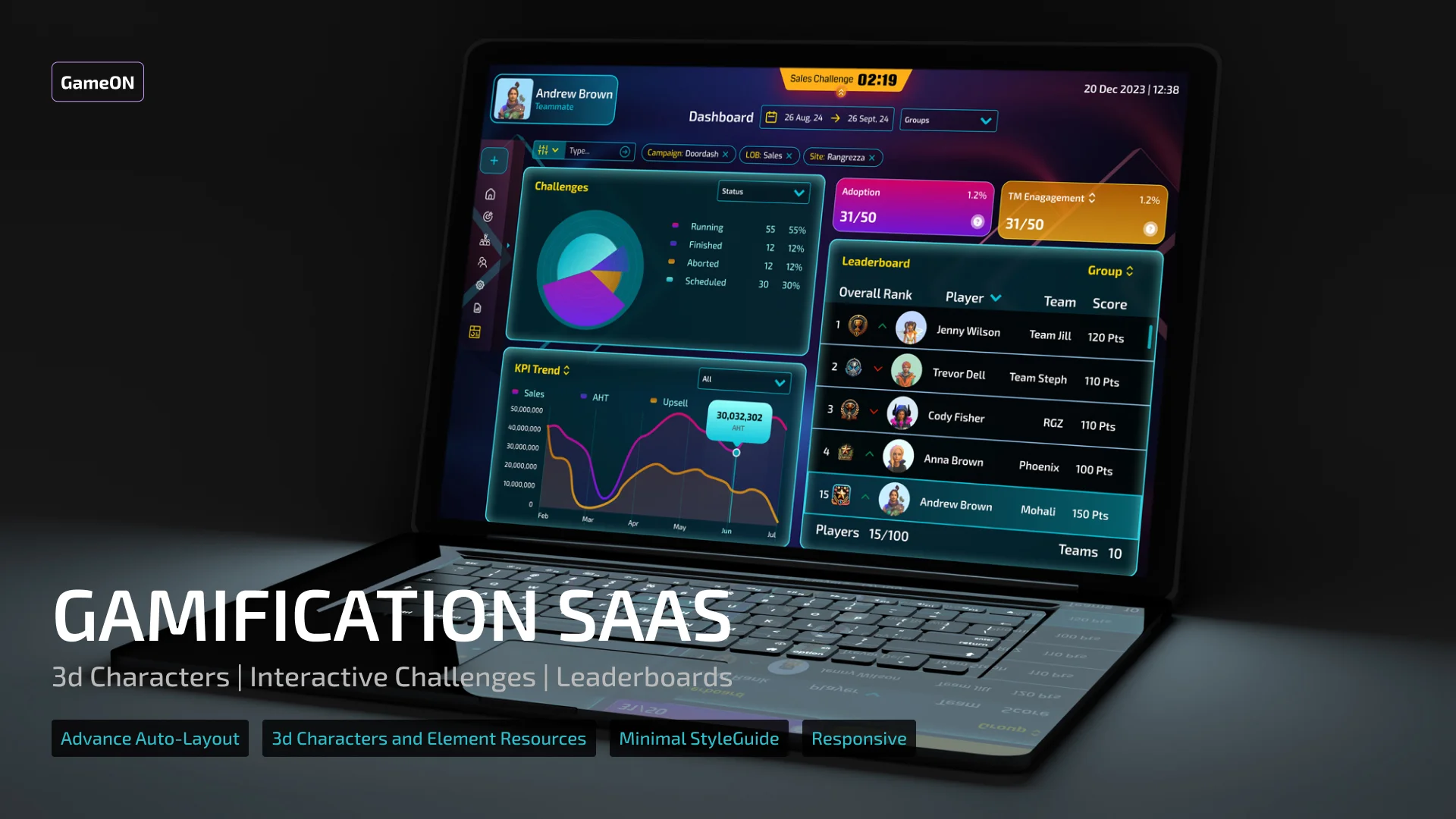
Say goodbye to mundane work management. LevelUp turns business goals into challenges, leaderboards and rewards: an enterprise gamification platform with 3D characters that became the company standard and was showcased at AWS Summit London 2025.
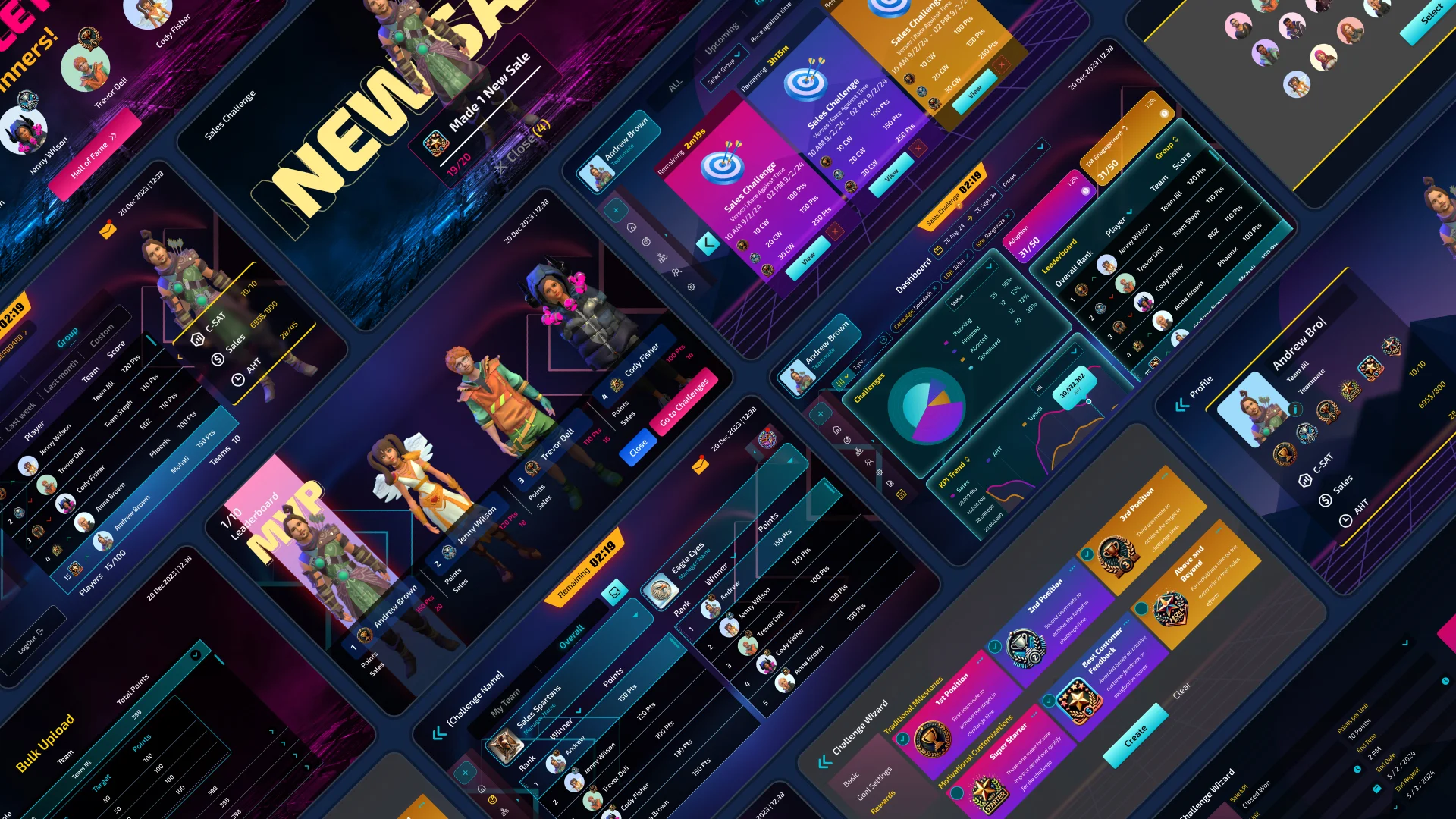
Motivation was being managed with spreadsheets.
High-volume operations run on repetition, and repetition erodes motivation. Targets lived in spreadsheets, recognition arrived weeks late, and the people doing the work rarely saw their own progress. The brief was to gamify business goals: make hitting a KPI feel like winning, not filing.
At the heart of LevelUp are features built for that single purpose. Team and group management keeps organisation simple. Challenge creation ignites competitive spirit. Leaderboards track success in real time, and flash messages celebrate victories the moment they happen.
"If progress is invisible, motivation is optional. Make it visible, and it becomes a habit."
Managers configure.
Agents play.
LevelUp is really two products wearing one interface. Team leads live in the configuration plane: KPIs, targets, team structures, challenge rules, reward budgets. Agents live in the game itself: avatars, leaderboards, flash wins. Neither audience is the primary one, and the system fails if either is treated as an afterthought. A challenge that is effortless to configure but joyless to play dies in a week; a game agents love but managers take an hour to set up never gets created at all.
So every design decision had to hold in both directions at once. The difficulty curve a manager tunes in a dropdown is the emotional arc an agent rides for the next two weeks. The KPI a manager maps in a data table becomes the finish line an avatar crosses in front of the whole floor. Designing that handshake, configuration on one side and lived experience on the other, was the real work, and it shaped every screen in the system.
One flow, from goal to glory.
The user flow follows a single motivational loop, from defining success to celebrating it. Every screen belongs to one of eight moments, so managers and players always know where they stand and what comes next.
Set the goal
Managers define KPIs, targets and time frames. Every victory starts with a clear, measurable goal aligned to the team's objectives.
Craft the challenge
A challenge wizard turns any target into a competition in a few clicks: milestones, rewards and rules without a training manual.
Make it personal
Players pick 3D avatars; managers tune difficulty, themes and durations so every challenge fits the team it is built for.
Play the work
Races against time, team versus team, milestone hunts. Each format maps to a different operational moment and KPI type.
Live leaderboards
Real-time ranks by player, team and group. Progress is public, immediate and honest, which is what makes it motivating.
Flash the wins
Dynamic flashcards announce every sale, milestone and MVP the moment it happens. Recognition stopped arriving weeks late.
Cross the line
Winners take the spotlight with badges and hall-of-fame moments. The finish line is staged as a beginning, not an ending.
Earn the perks
Badges, points and exclusive rewards reflect real work. Everyone who takes part wins something. Players wear their achievements, and the loop starts again.
A game on the surface. A design system underneath.
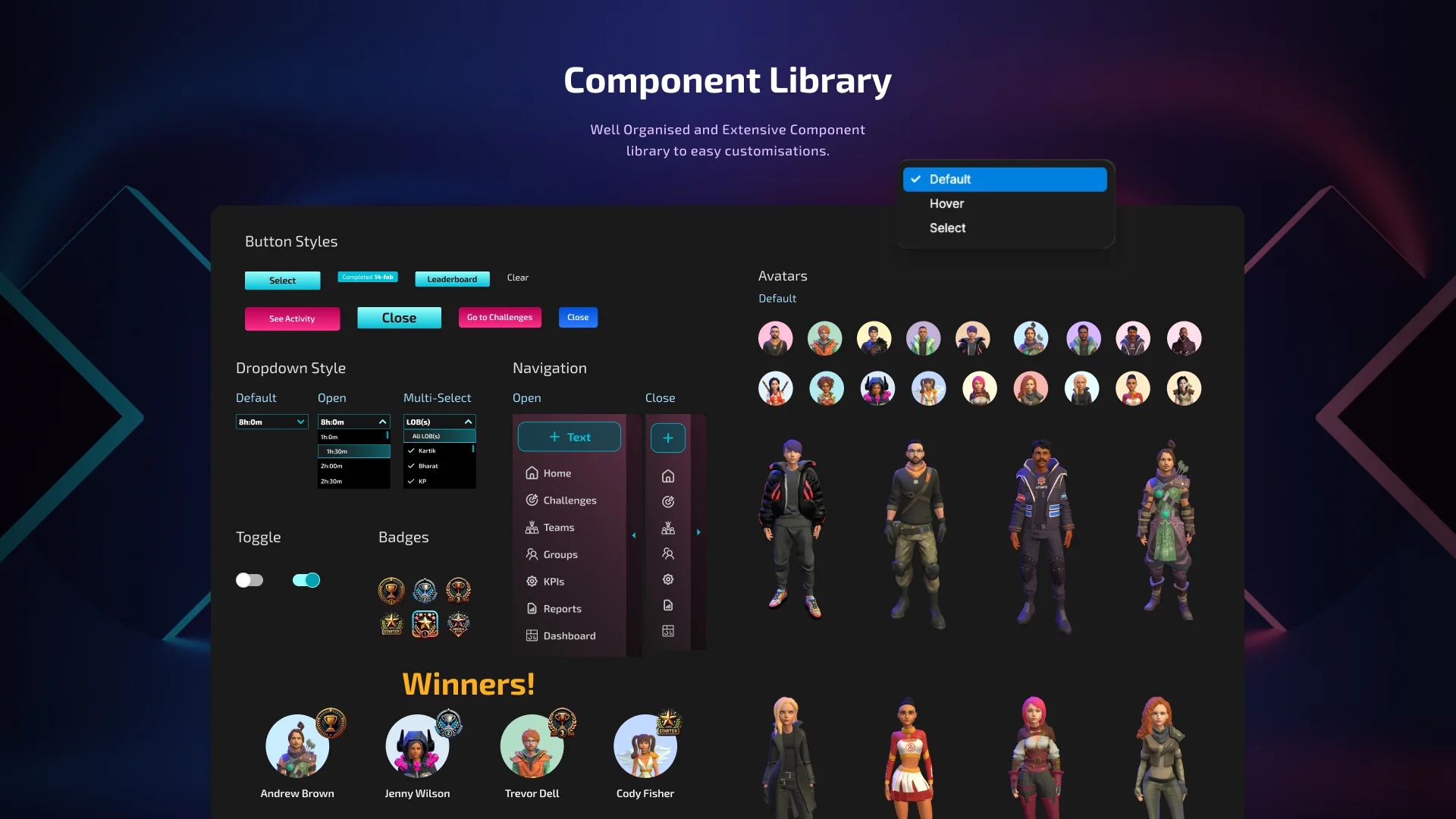
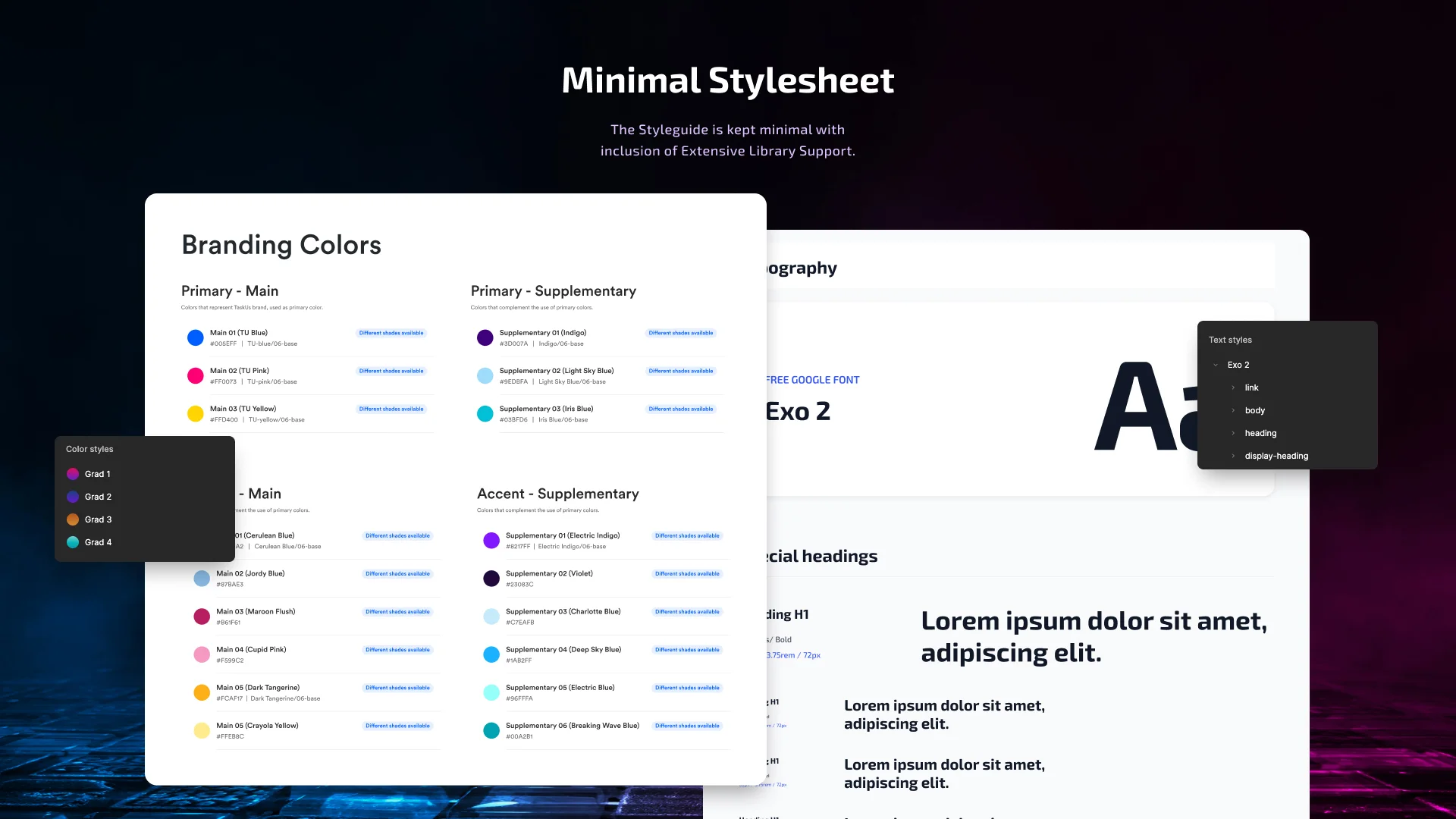
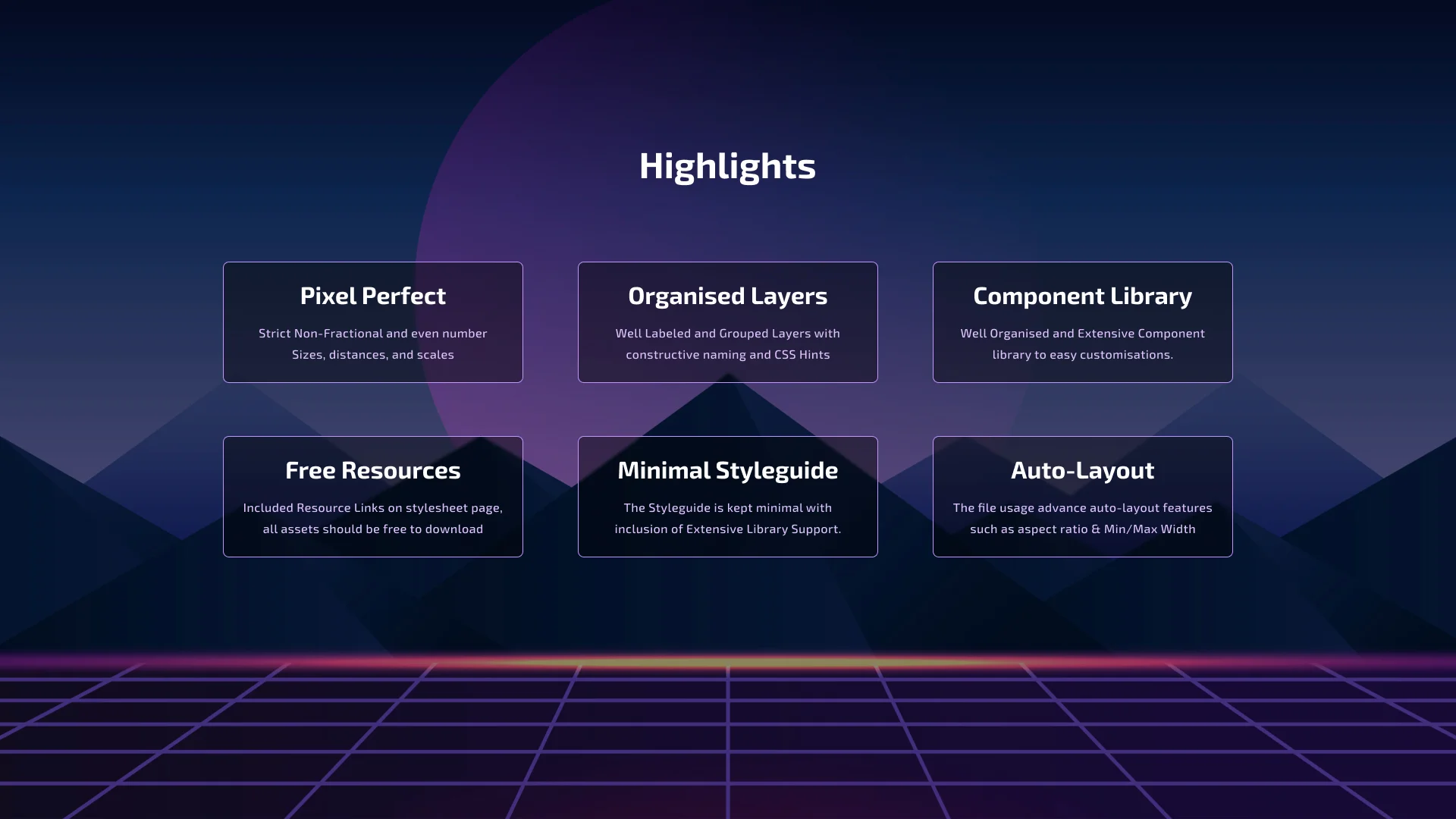
Playful does not mean loose. The file is pixel-perfect with strict non-fractional sizing, organised layers with constructive naming and CSS hints, and advanced auto-layout with aspect ratios and min/max widths. The styleguide is kept deliberately minimal, backed by an extensive component library so teams can customise without breaking the system.
The visual language pairs Exo 2 and Poppins with a neon-on-dark palette and a cast of 3D characters built in Three.js. The characters carry the emotional weight: they are what players see climb the leaderboard, collect badges and take the MVP spotlight.
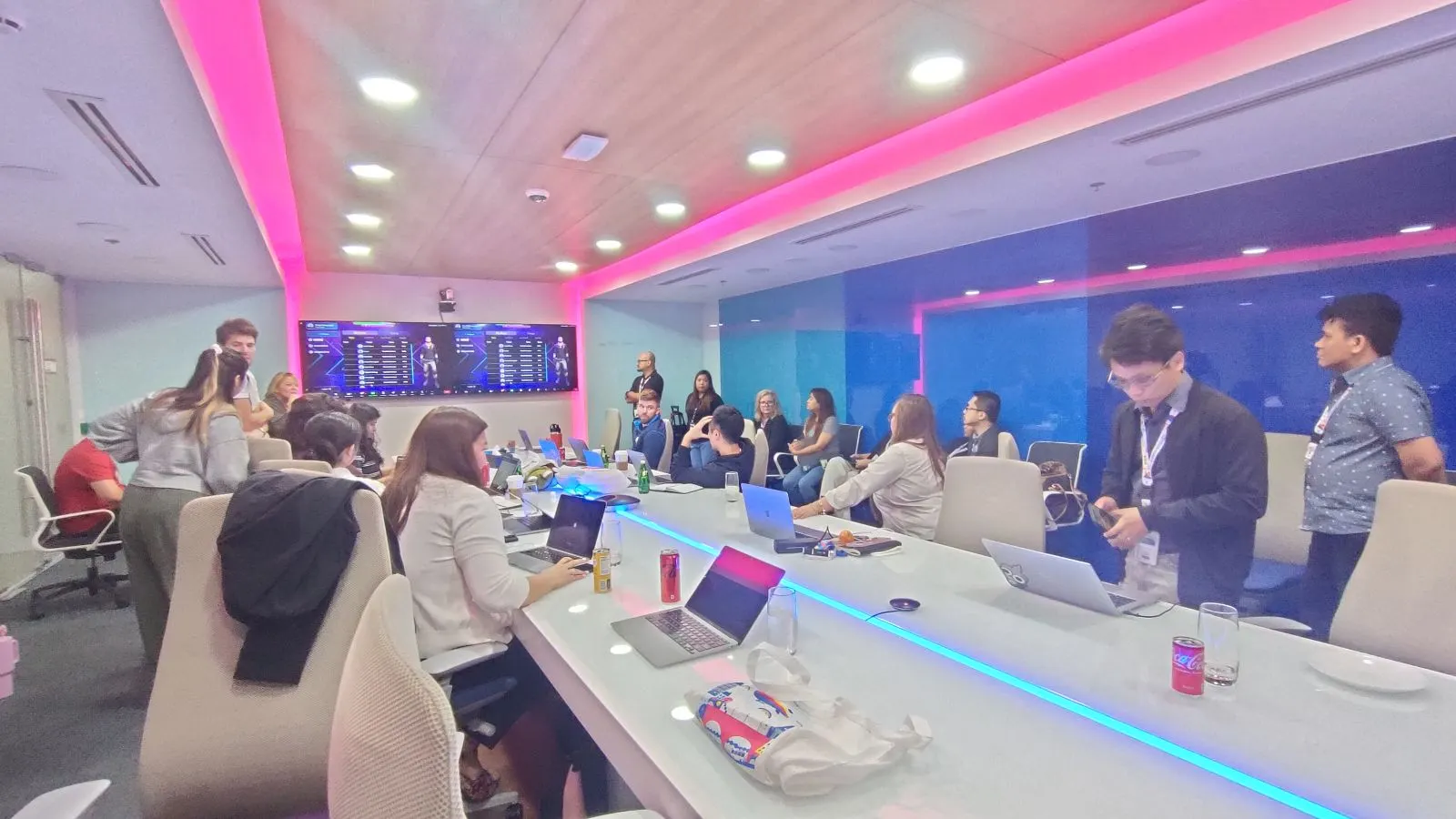
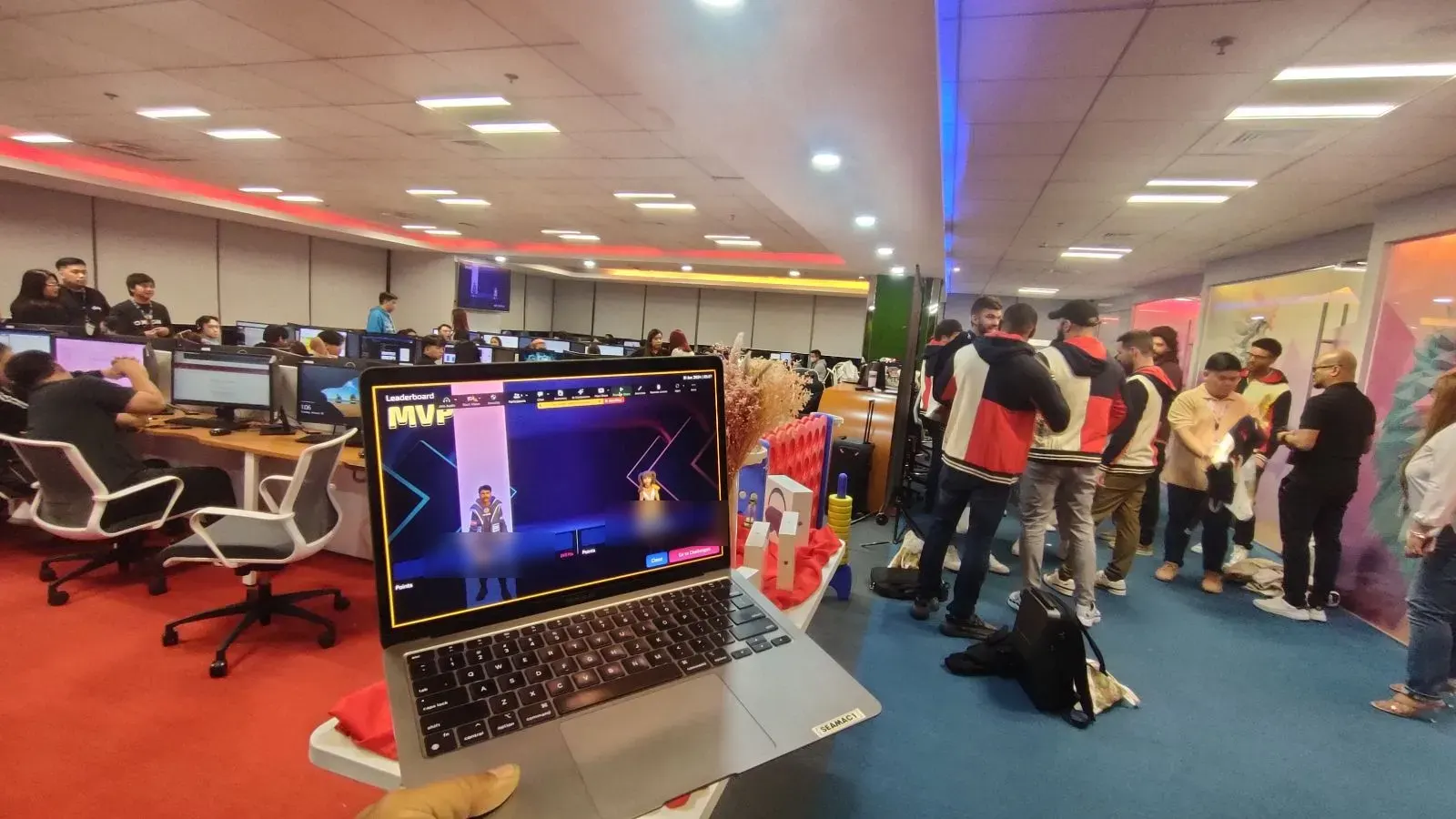
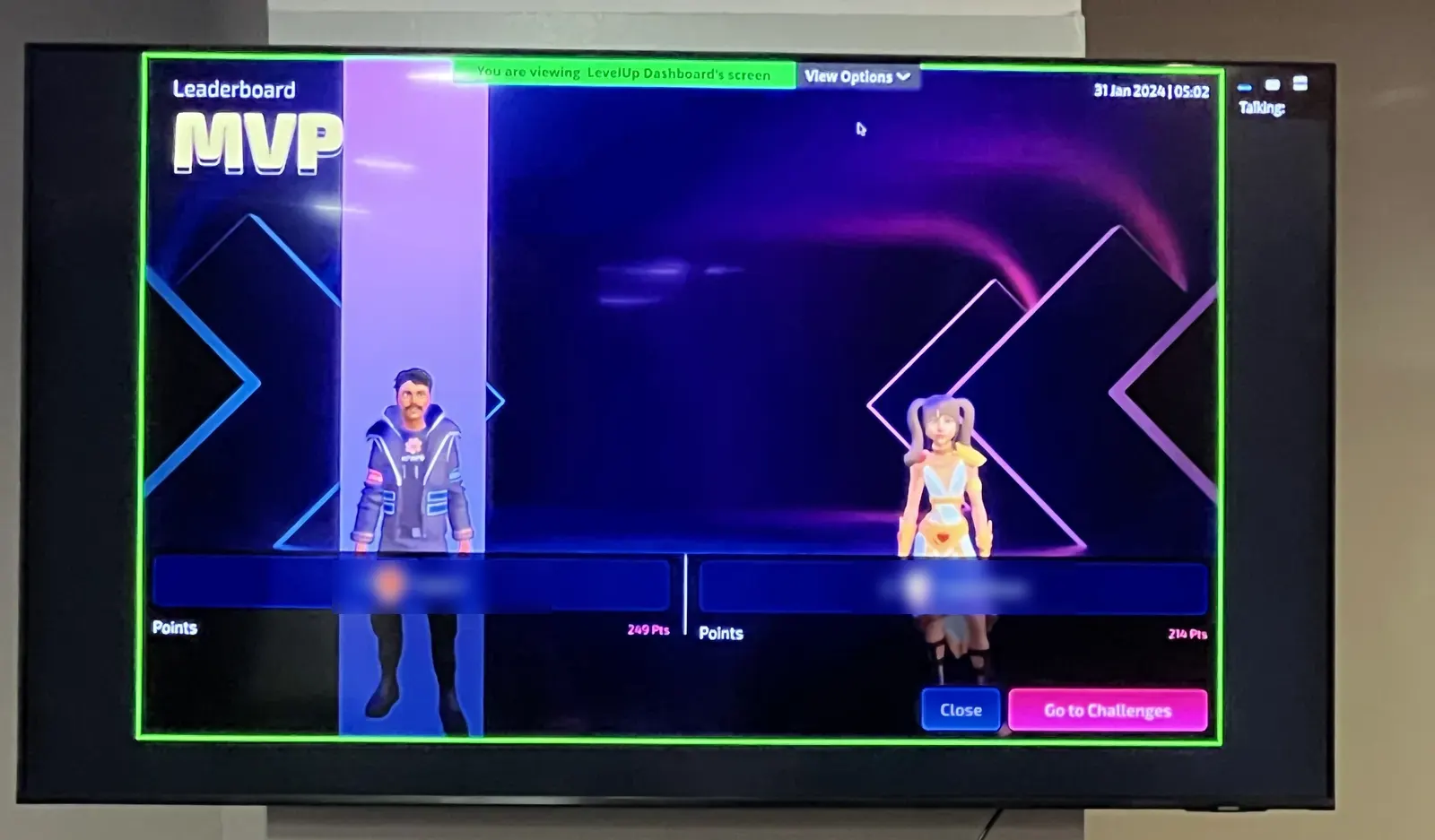
31 January 2024. The floor lights up.
LevelUp went live across TaskUs sites with the avatars on every screen: the MVP spotlight on the operations floor, live leaderboards in the boardroom, and teams watching their names climb in real time. Not a Figma frame. A shipped product, in the rooms it was designed for.
Showcased at AWS Summit London 2025.
The company standard for gamification.
LevelUp was the first gamification system of its kind at TaskUs. It became the company standard, was showcased at AWS Summit London 2025, and runs alongside the wider product suite used by around 35,000 people every day across 14 countries.
The deeper result is cultural: progress became visible, recognition became instant, and the scoreboard became something people check because they want to, not because they are told to.