TaskGPT.
The AI that works
inside the call.
End-to-end design of an enterprise AI productivity suite built on OpenAI, PaLM 2 and LLaMA, for agents on live customer calls across 14 countries. Call-handling time and operational costs each fell 20%.
Agents on live customer calls. A playbook designed before AI existed.
TaskUs agents handle complex enterprise support across 14 countries: insurance claims, fintech queries, healthcare triage. The existing tooling was built for a pre-AI world: multiple tabs, manual copy-paste, static knowledge bases. Resolution time was high. Operator cognitive load was higher.
The brief was not "add AI to the product." It was redesign the entire operator workflow assuming AI is native to every step, from query classification to response generation to quality evaluation. A full paradigm shift, not a feature addition.
"Operators should think less about finding answers and more about delivering them."
I used to be the user. So the AI went where agents already were.
My first job was in a call centre, so I knew what a mid-call tab switch costs: a pause the customer hears. Much of TaskGPT ran as a Chrome extension inside the tool agents already used, so help arrived in the same window as the conversation. When the AI suggested interface labels, I kept only the ones that matched the words the business already used, so nobody had to learn a new vocabulary to use a new tool.
Inside the existing tool
A Chrome extension in the agent's current workspace. No new app, no switching windows mid-call.
Words the business already uses
AI-suggested labels were kept only when they matched the terms agents and clients already used.
Designed to be measured
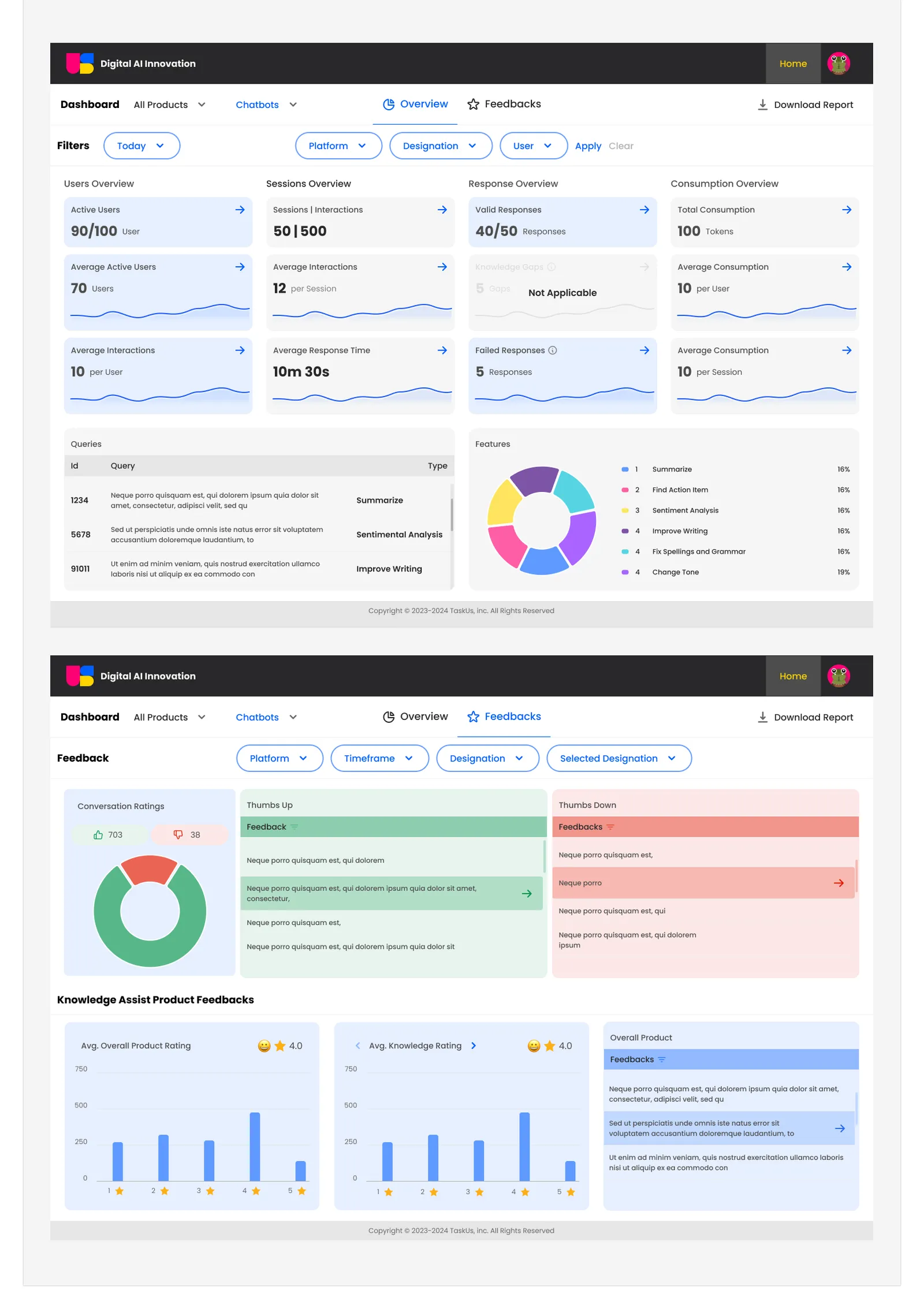
Usage, answer quality (valid versus invalid responses, guardrail triggers, response time), token cost and agent feedback, tracked from the start.
An encrypted layer
Moving the suite behind an encrypted layer solved the privacy problem and made it 20% faster in the same move.
Operators use the AI. Admins configure it.
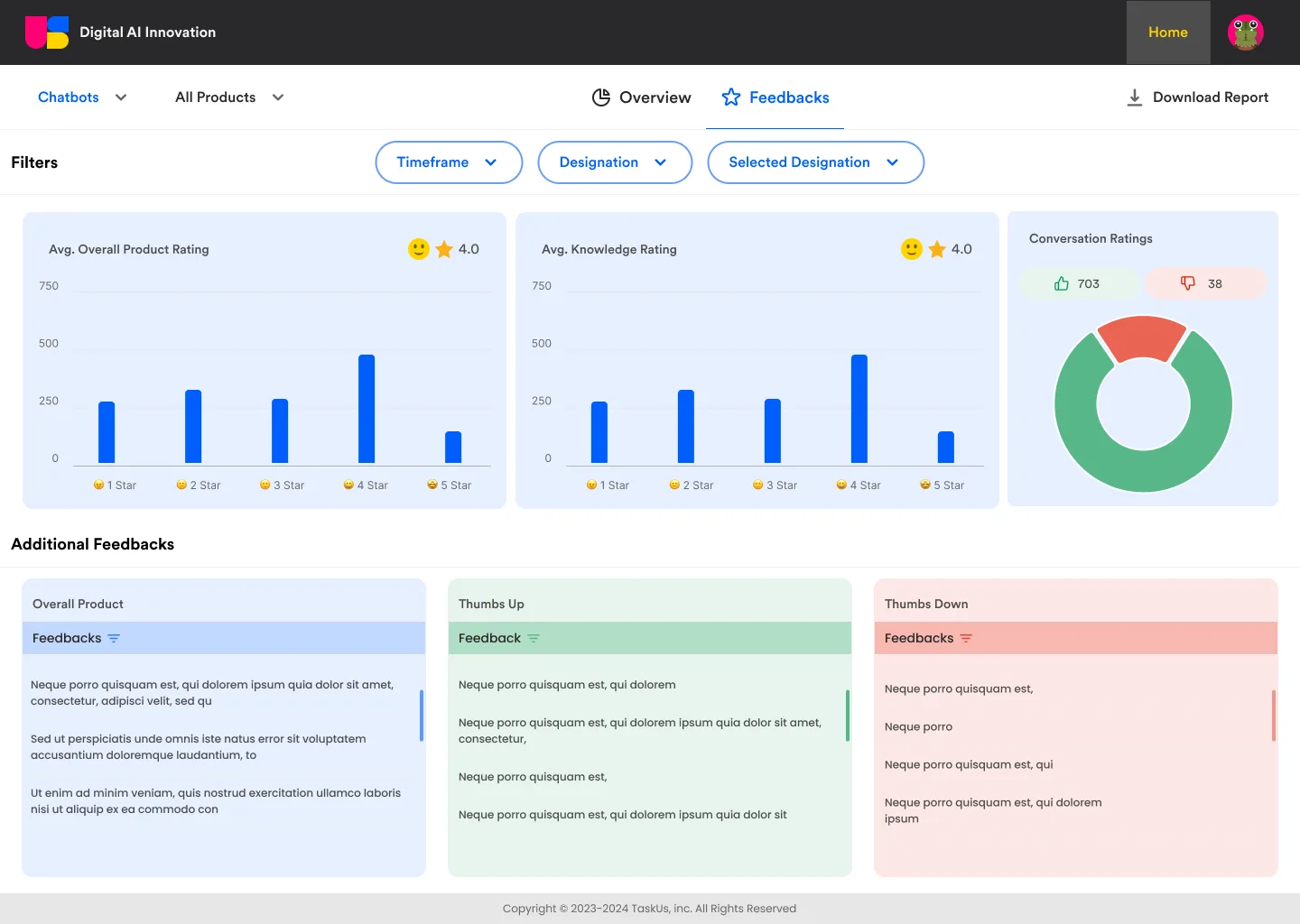
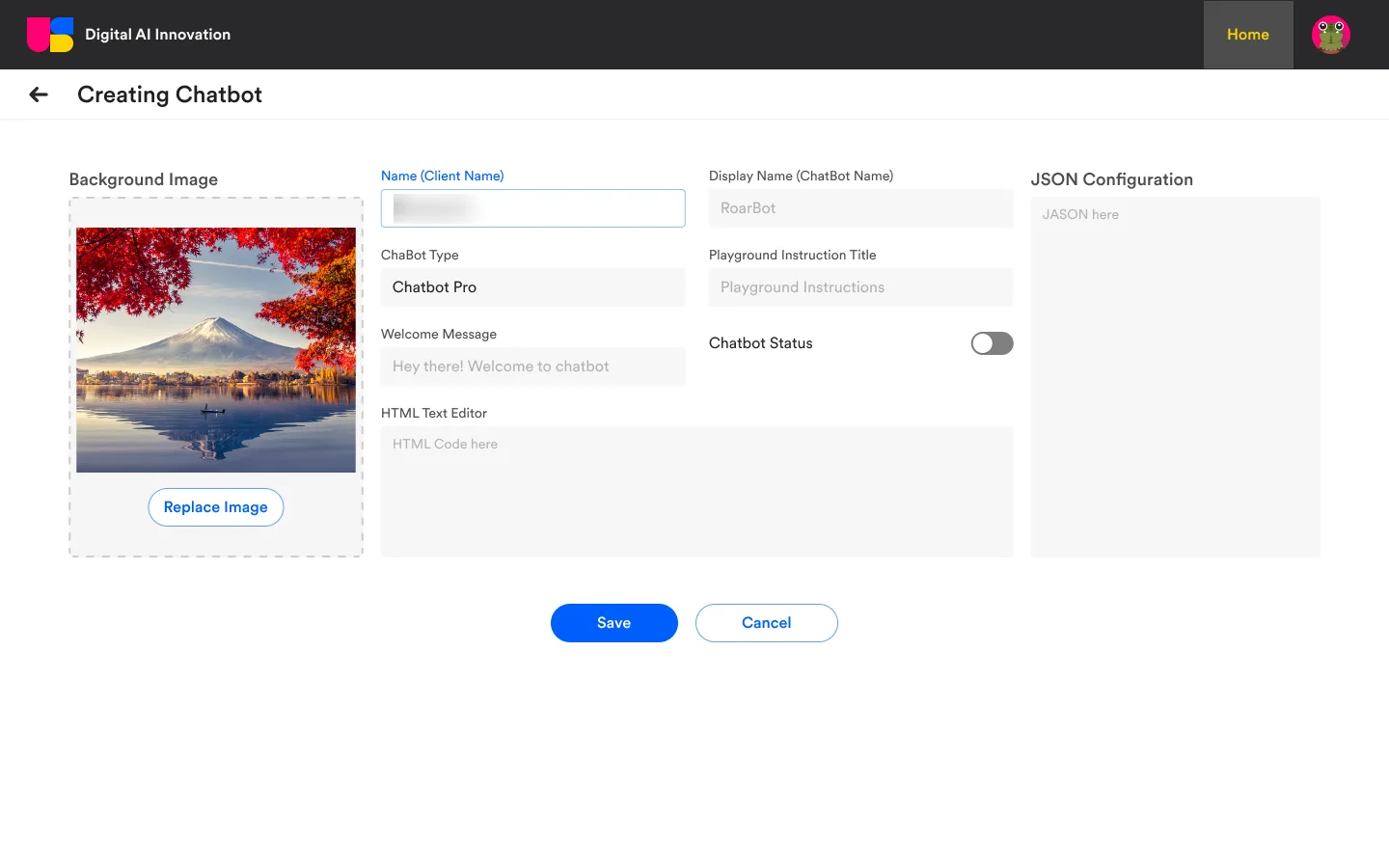
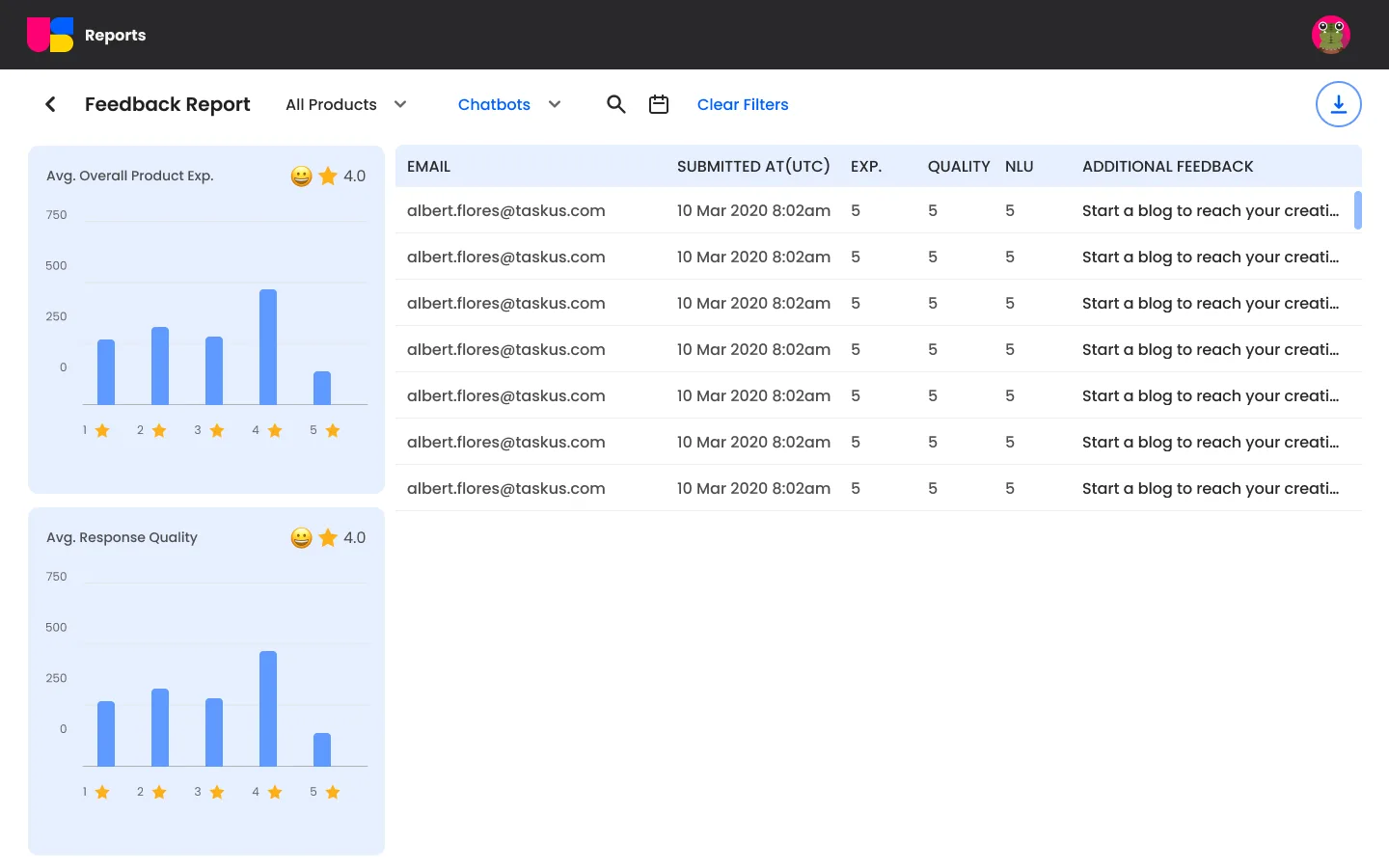
TaskGPT is two products in one interface. Operators live in the assistant during live customer conversations. Behind them sits the admin plane: chatbots configured per client, usage and consumption dashboards, and data-dense feedback reporting that tells the team what the AI is actually doing in production. Designing both directions at once, configuration on one side and lived workflow on the other, is what made the suite hold together.
20% less call-handling time. 20% lower operating cost.
Measured from the start.
TaskGPT shipped across 14 countries as part of a TaskUs product suite used by around 35,000 people a day. Call-handling time fell 20%, and operational costs fell 20%.
Because measurement was part of the design, the team could see adoption, answer quality and token cost side by side, and decide where to invest next.